
Inside Opus Dei
Control, labor, and sanctified suffering

Founded in 1928 by Spanish priest Josemaría Escrivá, Opus Dei presents itself as a conservative Catholic organization dedicated to helping “ordinary people” achieve “holiness” through everyday life. It operates under the authority of the Vatican as a “personal prelature,” a special structure within the Catholic Church that allows it to function across national boundaries. In its own telling, it’s about discipline, humility, and “finding God” in daily routines.
If you ask Opus Dei, it’s a wholesome “spiritual path”: ordinary people sanctifying daily life through hard work, prayer, and quiet devotion. If you ask prosecutors, former members, and a growing list of journalists, the picture starts to look less like a pious self-help club and more like a case study in how far “religious vocation” can be stretched before it snaps.
Take Argentina, where prosecutors in 2024 accused members of recruiting dozens of young women from low-income families as “assistants.” The sales pitch: education, opportunity, a better life. The alleged reality: unpaid domestic labor for decades. It’s the kind of bait-and-switch that would make even the most cynical corporate recruiter blush – except this one comes wrapped in divine purpose. Coverage by The Guardian describes a system that looks less like “spiritual growth” and more like servitude with better branding.
Former members paint an equally charming picture of internal life: strict control, limited contact with family, and a strong emphasis on suffering – because apparently God prefers his followers slightly miserable. Need medical care? Maybe. Want autonomy? That’s adorable. Critics call it psychological coercion; Opus Dei calls it “dedication”. Tomato, tomahto.
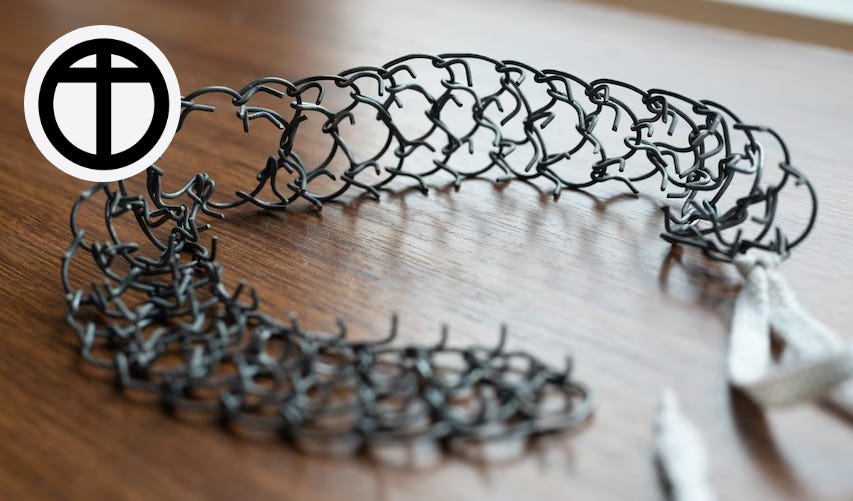
And then there’s the small matter of ‘mortification of the flesh,’ which sounds like a medieval poetry slam but turns out to involve occasional self-flogging and wearing a spiked chain (the cilice) - a traditional Christian instrument of penance and mortification of the flesh, typically featuring metal wire with sharp, inward-pointing spikes. Worn around the upper thigh, wrist, or waist, it induces discomfort as a method of self-punishment and spiritual discipline.
While defenders insist this is voluntary, one might reasonably ask: if holiness requires self-inflicted pain, is it holiness – or just very committed branding?

Recruitment practices add another twist. Reports suggest teenagers are actively encouraged to join early, sometimes without full parental awareness. Because nothing says “informed spiritual choice” like getting them before they’ve figured out taxes, let alone lifelong vows.
Financially, things don’t get much clearer. Investigations have raised questions about links to institutions such as Banco Popular and alleged fund flows that critics say deserve more scrutiny. It’s not all proven – but there’s enough ambiguity to keep journalists busy and accountants nervous.
Historically, Opus Dei has also been accused of being a bit too comfortable around power, including connections to Francisco Franco. Supporters call it historical context; critics call it a pattern.
Unsurprisingly, Opus Dei denies everything. The allegations are, according to the organization, a grand misunderstanding – a “false narrative” about people who are simply living their faith freely. Nothing to see here, just deeply committed believers who coincidentally follow strict rules, endure suffering, and don’t complain.
Meanwhile, journalist Gareth Gore and outlets like The Guardian and the National Catholic Reporter continue to dig, suggesting the story is far from settled.
So what is Opus Dei, really? A spiritual “path to holiness” – or a masterclass in how to repackage control, labor, and suffering as virtue?
***
Article 46 of 100
This piece is part of the 100 Coffees for 100 Articles campaign. Buy us a coffee and help bring our future website to life. ☕
If it’s religious it’s grooming. Everything they do has one goal, subjugate more people and control them through guilt and fear to get them to commit to the fallacy that there is a god. I’m an atheist. I understand that believers have a huge emotional and financial investment in believing. The universe shows us unequivocally that everything is impermanent. No life after death. Many people cannot come to terms with that. During the Spanish Inquisition the church basically said heretics will be tortured and burned at the stake until all that’s left are believers. Then they can say to themselves, see, we are right. And get to go to Disneyworld in the sky.
I’d say it sounds like religious indoctrination taken to an extreme. Until you look back at the past history of Christianity, especially during the Dark Ages, where real torture was also considered “divine”…