
The Problem With Calling China “Atheist”
Real unbelief requires freedom.

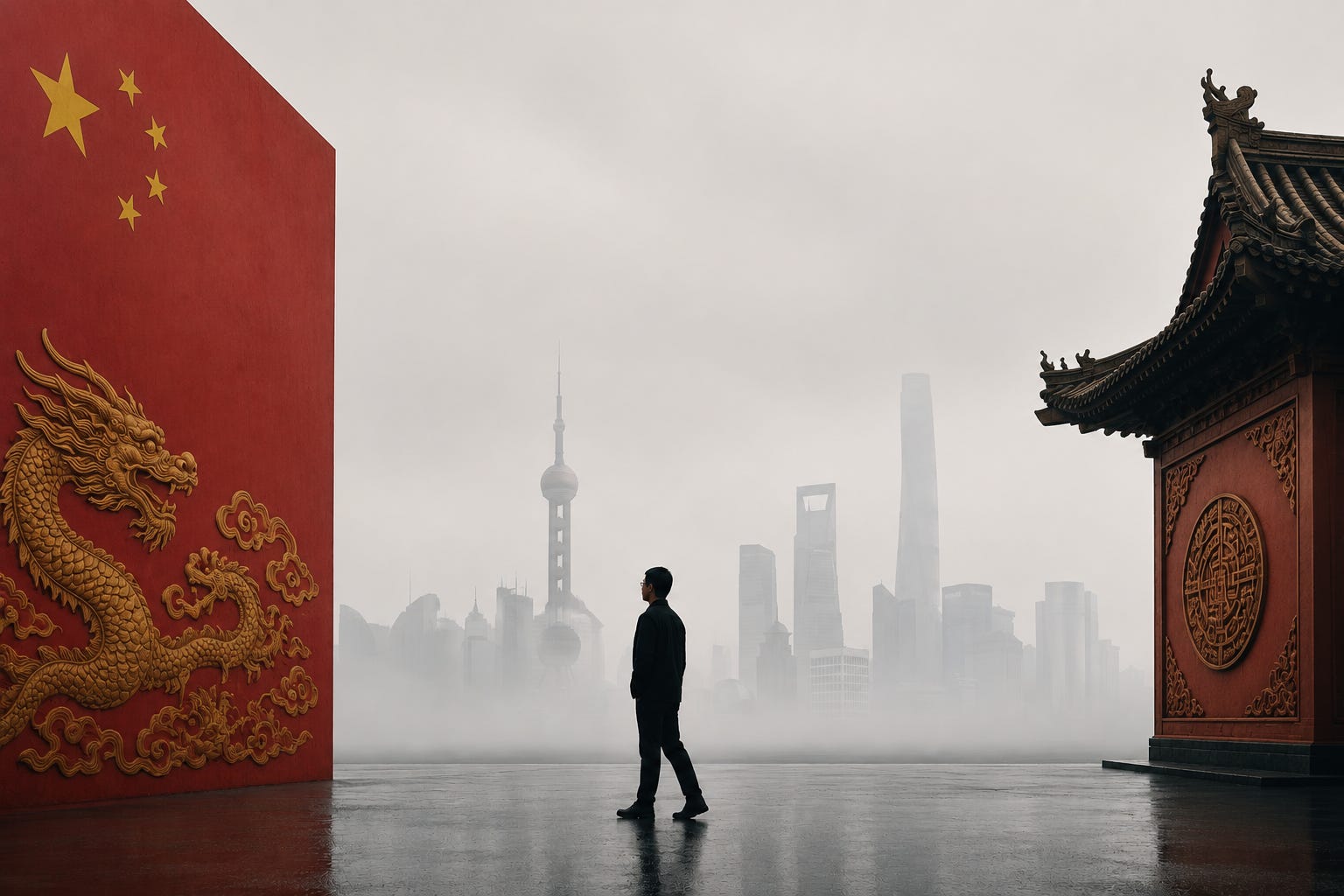
For years, headlines and surveys have repeated the same claim: China is the world’s most atheist country. On paper, the numbers appear convincing. Huge percentages of Chinese citizens report having “no religion,” and the officially atheist state has spent decades promoting secularism and suppressing organized faith.
But the reality is far more complicated – and politically uncomfortable for both religious apologists and authoritarian regimes.
The government of China officially promotes atheism through the Chinese Communist Party, which has long viewed religion as a threat to ideological control. Religious groups are heavily regulated, censored, monitored, and sometimes persecuted. Underground churches face pressure. Muslim minorities face severe restrictions.
Under those conditions, survey data become inherently unreliable.
If a citizen lives under a one-party dictatorship that openly favors atheism, “I have no religion” may not always mean: “I genuinely reject supernatural claims.” Sometimes it may simply mean: “I do not trust the state enough to answer honestly.” True atheism cannot be meaningfully measured in a society where people are not fully free to speak, organize, worship, criticize, or dissent.
At the same time, religious defenders often misuse this uncertainty to suggest that China is secretly deeply religious and merely hiding it.
That interpretation is also misleading. Many Chinese people who report having “no religion” still participate in spiritual or supernatural practices. Ancestor rituals, temple offerings, folk deities, feng shui, lucky numbers, and traditional metaphysical beliefs remain widespread.
This exposes a deeper flaw in simplistic global rankings of atheism. They often confuse:
- lack of church membership,
- lack of organized religion,
- and an actual lack of belief in supernatural forces.
Those are not the same thing.
Real atheism is not merely the absence of religious affiliation under state pressure. It requires intellectual freedom: the ability to openly examine, criticize, reject, or embrace religious ideas without coercion from either churches or governments.
A dictatorship that suppresses religion does not automatically create a genuinely atheist society any more than a theocracy creates genuine faith. In both systems, power distorts worldview. True atheism emerges not from fear, censorship, or ideological enforcement, but from open inquiry.
In conclusion, China appears to have low levels of organized religion, but informal and non-institutional beliefs remain widespread in everyday life. However, under an authoritarian system with significant social and political constraints, public reporting is limited in its reliability. More broadly, survey methodology itself is insufficient to make precise cross-country claims about the extent of atheism.
P.S. If this article resonates – buy us a coffee. Your donation will help build our future website.
***
Article 67 of 100
This piece is part of the 100 Coffees for 100 Articles campaign. Buy us a coffee to sponsor the next one. ☕
Your religion doesn’t matter a damn bit as long as it does not hurt other people. Buddhism? Bahia? That’s about it, no?